Address: Piaţa Eftimie Murgu, Nr. 2, 300041, Timisoara
Phone: 0256494604
E-mail: diana.antal@umft.ro
Head of the Academic Department
Members



The Academic department of Pharmaceutical Botany was founded in 1991, with the establishment of the specialization “Pharmacy” as a section of the Faculty of Medicine. Until the end of 2004, the teaching and scientific activity was coordinated by Prof. univ. Dr. Ioan Coste, a prestigious professor who instilled in his collaborators and students a special appreciation for the Plant Kingdom and medicinal plants. Currently, the activity of the discipline is under the coordination of Prof. univ. Diana S. Tchiakpe-Antal, PhD. She is a graduate of the Faculty of Pharmacy in Timisoara. She specialized in phytochemistry at the Institute of Pharmacy in Innsbruck (Austria), acquiring practical skills in isolating active substances from plants, elucidating their chemical structure using spectroscopic methods (1D and 2D NMR, LC-MS) and validating HPLC methods for analysis of extracts. The scientific activity includes books and chapters in specialized books, scientific articles indexed by the Web of Science (Clarivate Analytis), conference papers, as well as the participation to various research grants (see CV).
The educational offer of the Academic Department of Pharmaceutical Botany includes lectures and laboratory practice within the programs Pharmacy (in English, French and Romanian languages), Pharmacy Assistance and Medical Cosmetics. The subjects taught are:
- Pharmaceutical Botany – 1st year Pharmacy, semesters I and II, Romanian, English and French series
- Pharmaceutical Mycology (optional subject) – 1st year Pharmacy, first semester, Romanian, English and French series
- Medicinal plants – 1st year Pharmacy assistance, first semester
- Mycology with pharmaceutical applications – 1st year Pharmacy assistance, first semester
- Medicinal plants – 1st year Medical cosmetics, first semester
- Products of plant origin in cosmetics – 1st year, Medical cosmetics, first semester
- The Academic department of Pharmaceutical Botany also provides courses and laboratory practice within the master’s program of the Faculty of Pharmacy “Applied Phytotherapy”.
Within the discipline there is the possibility to carry out doctoral studies, Prof. Tchiakpe-Antal was awarded the certificate of habilitation in the field of Pharmacy (OM 3829/4.06.2018). She is affiliated to the Doctoral School of UMFVBT.
Objectives. The subject Pharmaceutical botany aims to transmit students knowledge about plants of pharmaceutical interest. The lecture and the laboratory practice of the first semester have as objective the presentation of the composition of the plant organism, an important source of pharmacologically active substances. The specificities of the plant cell are explained, followed by the presentation of structures involved in the biosynthesis and storage of the active compounds, the morphology and the anatomy of the plant organs, as well as the specialized terms used to describe medicinal plants.
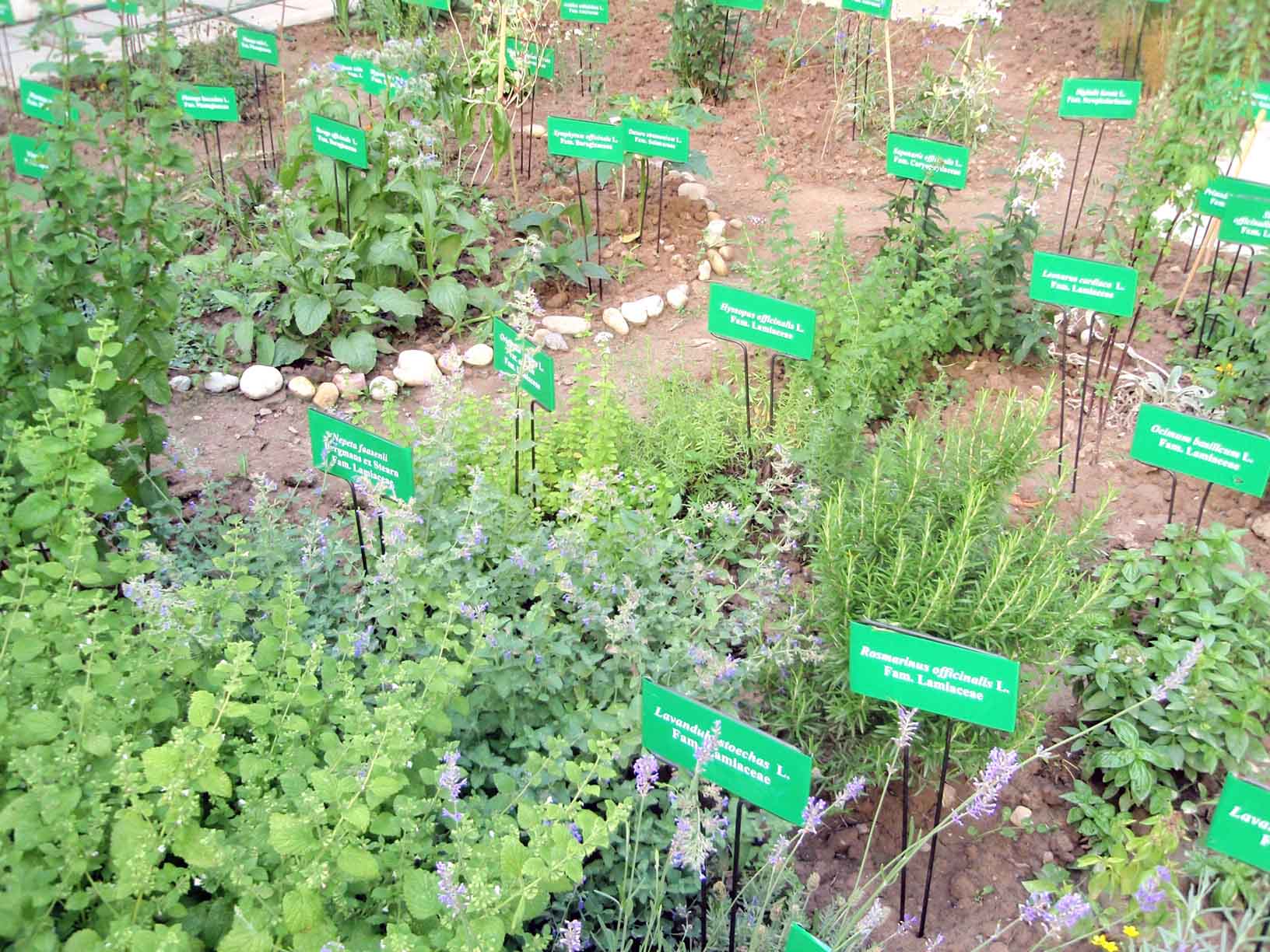
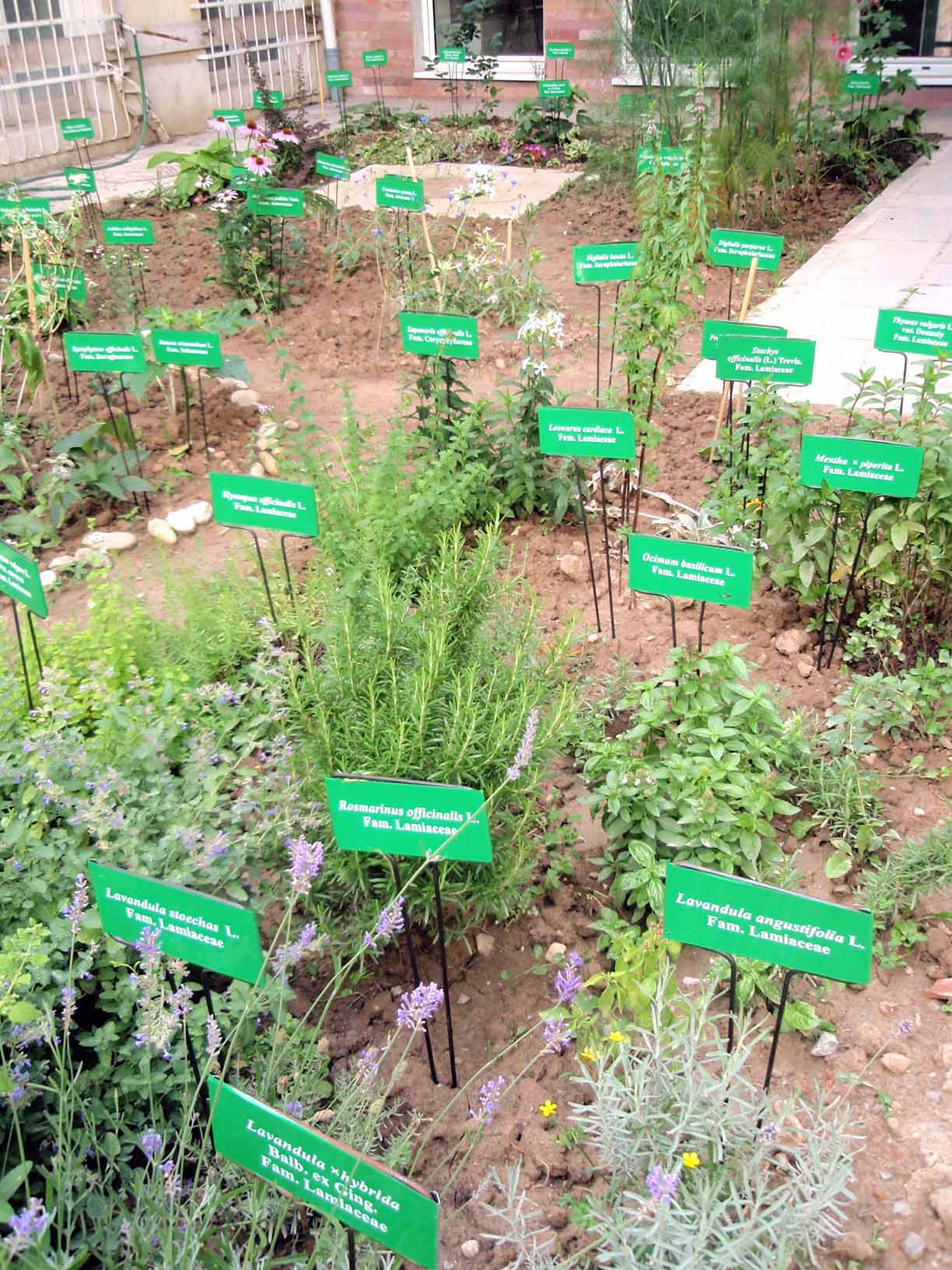
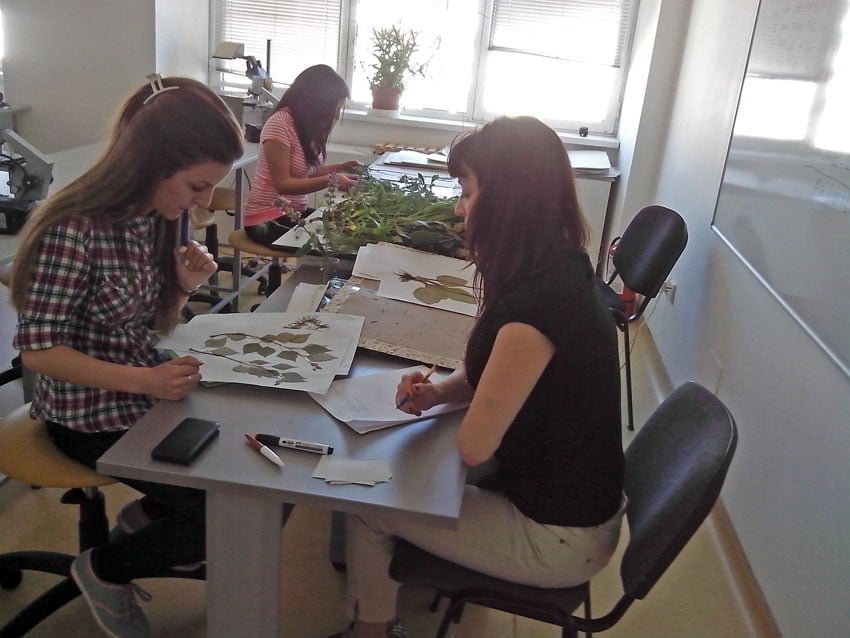
In the second semester, the main plant species supplying medicines are presented, in terms of taxonomy, botanic description, used organ, chemical composition, action and usage. The laboratory practice focuses on learning the techniques of plant determination and observation of medicinal plants (herbarium specimens, photos, living plants from the botanical graden of the faculty).
The skills acquired by students include the use of microscopy techniques with applications in quality control of plant products, and knowledge of the most important plants of pharmaceutical interest. The aim is for the student to be able to recognize, in fresh or herborized form, the main plants used medicinally, and to distinguish them from toxic species or without therapeutic value with a similar appearance (but inferior in quality or representing falsifications).
The knowledge of the main medicinal species as well as the whole set of knowledge taught in the discipline of Pharmaceutical Botany contributes to the formation of the vocabulary specific to the profession.
The fields of research in which the staff of the discipline of Pharmaceutical Botany is involved include:
Investigation of ethnopharmaceutical heritage in the west of the country. The study of the tradition phytotherapy has allowed, worldwide, the discovery of valuable drugs of plant origin – anticancer, anti-inflammatory, anti-infective, anti-dementive etc. Plants and other categories of living organisms are, even today, in the age of chemical synthesis, major sources for the discovery of new active substances. Folk medicine provides important preliminary data on the possible use of plants – thus, its investigation is one of the fundamental steps in the discovery of new therapeutic active substances.
The study of extracts and natural compounds obtained from smoketree (Cotinus coggygria Scop.), a shrub from the Anacardiaceae family, known in traditional medicine for its healing effect. The anti-inflammatory and anti-tumor effects of the plant and some innovative derivatives are were evaluated in the bilateral project Romania-France PNII-CT-789 / 30.06.2014 «Nanostructures with aurons, chalcone and standardized plant extracts: development of a new prototype chemopreventive and anti-inflammatory agent».
Study of extracts from pseudo-fruits of juniper (Juniperus communis). Juniper (Juniperus communis) is a gymnosperm that stands out for its cone berries rich in volatile (monoterpenes) and non-volatile (flavonoids, diterpenes, lignans) bioactive compounds. Pseudo-fruits have a long traditional use in herbal medicine, to treat digestive and urinary tract disorders. The experiments carried out contribute to the knowledge of the chemical composition of juniper extracts and their bioactivity in terms of antibacterial and cytotoxic effects on lines A375 and PANC-1. They highlight the presence of favorable properties on gram-positive germs, on human melanoma cells, but also on liver cells.
Study of extracts from green coffee seeds (Coffea arabica). Coffee seeds are rich in bioactive compounds, such as polyphenols, alkaloids, and diterpenes. The effects of coffee have been extensively studied on the central nervous system, especially in the context of cardiovascular, metabolic and gastrointestinal diseases. More recent directions concern the immune stimulating and chemopreventive effects. In contrast, the effects of coffee seed extracts and compounds in the dermatological field are rarely addressed. The research within our department has made contributions in this direction, successfully carrying out the systematic study of the bioactivity of some extractive fractions obtained from green coffee seeds.
Investigating the action of plant extracts and bioactive plant compounds in metabolic syndrome. Natural products have favourable effects on several components of the metabolic syndrome (obesity, insulin resistance, dyslipidemia, hypertension). In this sense, secondary metabolites such as flavonoids, stilbenes and phenol-carboxylic acids can be exemplified.
Highlighting cellular and histological structures with a role in biosynthesis and storage of active principles in medicinal plants. These researches are carried out with the active participation of the students with the diploma thesis at the Academic Department of Pharmaceutical Botany.
Useful Links:
- https://www.flickr.com/photos/botanicafarmaceuticatm/albums/
Students can access original photos of medicinal plants in their natural state, of herbarium specimens, as well as of cross-sections.
- https://www.mobot.org/mobot/research/apweb/
Angiosperm Phylogeny Website. It is the official site of the Angiosperm Phylogeny Group. Here you can find, under TREES: the cladogram of spermatophytes, the cladograms of all orders, and under APOMORPHIES the distinctive characters of the phylogenetic branches, orders and families, the number of species / genera / families in the order.
- http://www.ipni.org/index.html
‘The International Plant Names Index (2004). Published on the Internet http://www.ipni.org.
It is a database containing the name and basic bibliographic details for all cormophytes.
- http://www.iucn.org/
The official website of The World Conservation Union, the world’s leading environmental conservation network, bringing together 83 states, 197 government agencies, more than 1,200 non-governmental agencies and over 18,000 scientists in a single partnership.
Information can be found on protected plants, their area, habitat loss, etc.
- http://www.ga-online.org/links_en.html
Official website of the Society of Medicinal Plant Research
- http://www.pharmakobotanik.de/allgemei/koehler/koeh-lat.htm
database with scanned images from Köhler’s Medizinal-Pflanzen: excellent schematic drawings, with representative details of leaves, flowers, fruits.
- http://pbil.univ-lyon1.fr/JTHome/IDB/IDB/botany.html#a
The Internet Directory of Botany
It is an extensive index of the addresses of several hundred organic sites.